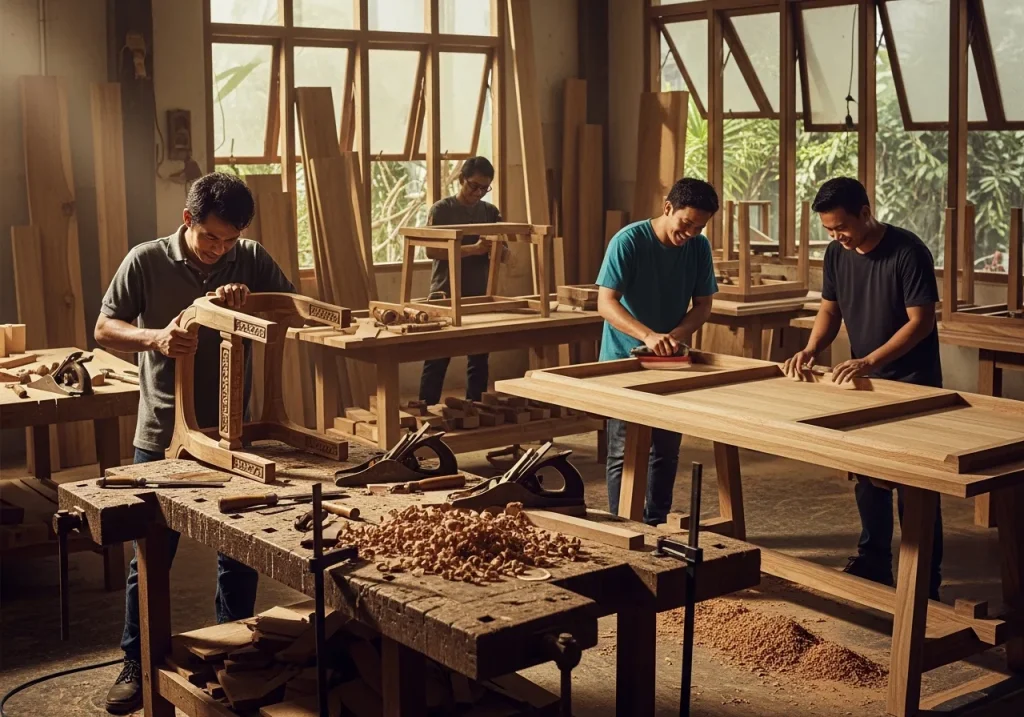
Understanding the teak furniture import process in 2027 requires a clear roadmap, from market trends to logistical considerations. This guide provides essential information for importers, wholesalers, and trade buyers, focusing on Indonesia as a key sourcing region for FSC-certified teak furniture.
The Global Teak Furniture Market in 2027
The global teak furniture market continues to demonstrate robust growth. In 2026, the market was valued at USD 36.9 billion and is projected to reach USD 53.7 billion by 2033, indicating a Compound Annual Growth Rate (CAGR) of 5.5%. A more narrowly defined global teak wood furniture market was estimated at USD 3.65 billion in 2025, with a forecast to reach USD 4.84 billion by 2034, showing a 4.1% CAGR. These figures highlight the sustained demand for teak products across various segments.
For Indonesia, a significant exporter of teak furniture, the overall furniture market was estimated at USD 9.1 billion in 2025 and is forecast to reach USD 15.2 billion by 2034, growing at a 5.82% CAGR. Other estimates place Indonesia’s furniture market at USD 7.97 billion in 2025, reaching USD 10.90 billion by 2030 at a 6.46% CAGR. Specifically for Indonesia’s home furniture sector, a forecast shows USD 5.15 billion in 2026, expanding to USD 6.32 billion by 2031 with a 4.19% CAGR. These consistent growth projections underscore Indonesia’s importance in the global furniture supply chain.
2027 Note: Evolving Certification Standards
By 2027, the emphasis on verifiable sustainability and ethical sourcing will be more pronounced than ever. Importers should expect increased scrutiny regarding Forest Stewardship Council (FSC) and Sistem Verifikasi Legalitas Kayu (SVLK) certifications. Ensuring your chosen exporter provides comprehensive documentation for all timber used is crucial for compliance and consumer confidence. This includes not only the raw material but also the entire chain of custody.
Understanding Teak Furniture Pricing
An average global teak wood furniture price was approximately USD 500 per unit in 2025, based on about 8 million units sold globally. This average, however, masks considerable variation. Pricing is influenced by several critical factors:
- Teak Grade: Plantation teak, reclaimed teak, and old-growth teak each command different price points due to their varying densities, grain patterns, and availability.
- FSC/SVLK Documentation: Certified products typically carry a premium, reflecting the assurance of legal and sustainable sourcing.
- Kiln-Drying Quality: Proper kiln-drying is essential for durability and stability, particularly in varying climates, and is a significant cost factor.
- Joinery and Construction: Traditional joinery techniques like mortise and tenon, doweled, or dovetail joints signify higher craftsmanship and longevity, impacting price.
- Finish: The type and number of finishing applications (e.g., natural oil, water-based sealant) contribute to the final cost.
- Order Volume: Larger wholesale orders generally qualify for more favourable unit pricing.
While specific Bali-specific retail or FOB price ladders are not universally published, these factors consistently drive pricing across the industry. Importers should anticipate that certified, export-ready products, especially those requiring specific quality controls for international markets, will be priced accordingly.
Key Sourcing Considerations for Importers
When sourcing teak furniture from Indonesia, particularly from regions like Jepara and Bali, several aspects are paramount:
Choosing the Right Exporter
Selecting a reputable FSC certified teak furniture exporter is fundamental. Look for exporters with a proven track record, transparent communication, and a comprehensive understanding of international shipping regulations. Verification of their certifications (FSC, SVLK) is non-negotiable.
Quality Control and Inspection
Establish clear quality control protocols. This includes pre-production sample approval, in-process inspections, and final inspection before shipment. Many importers opt for third-party inspection services to ensure adherence to specifications and standards.
Logistics and Shipping
Indonesia’s strategic location facilitates access to major shipping routes. However, understanding the intricacies of freight forwarding, customs clearance, and port operations (e.g., Surabaya, Semarang) is crucial. Work with exporters who have established relationships with reliable logistics partners. Determine require Full Container Load (FCL) or Less than Container Load (LCL) shipping, and understand the associated costs and transit times.
Payment Terms and Contracts
Standard B2B payment terms often involve an upfront deposit (e.g., 30-50%) with the balance due upon completion or shipment. Ensure all terms, specifications, and delivery schedules are clearly outlined in a legally binding contract to protect both parties.
The Importance of Certification: FSC and SVLK
For any importer of teak furniture in 2027, understanding and verifying timber certifications is vital for market access and consumer trust. The two primary certifications are:
- Forest Stewardship Council (FSC): An international non-profit organisation that promotes responsible management of the world’s forests. FSC certification ensures that products come from responsibly managed forests that provide environmental, social, and economic benefits. This is a globally recognised standard.
- Sistem Verifikasi Legalitas Kayu (SVLK): Indonesia’s national timber legality assurance system. SVLK ensures that all timber and timber products harvested or imported into Indonesia comply with national laws and regulations concerning legality and sustainability. For teak furniture exported from Indonesia, SVLK certification is a legal requirement.
An FSC certified teak furniture exporter will provide documentation proving that their timber originates from certified sources and that their production processes adhere to FSC Chain of Custody standards. This dual certification (FSC and SVLK) offers the highest assurance of legality and sustainability.
Navigating Export Documentation and Regulations
Importing teak furniture involves a range of documentation to ensure smooth customs clearance and compliance:
| Document Type | Purpose |
|---|---|
| Commercial Invoice | Details of goods, value, and terms of sale. |
| Packing List | Contents of each package, weight, and dimensions. |
| Bill of Lading (B/L) / Air Waybill (AWB) | Contract between shipper and carrier, proof of ownership. |
| Certificate of Origin | Confirms the country where goods were manufactured. |
| FSC/SVLK Certificates | Proof of legal and sustainable timber sourcing. |
| Phytosanitary Certificate | Required for wooden products to prevent pest transmission. |
| Fumigation Certificate | Confirms fumigation treatment for wooden packaging. |
| Insurance Certificate | Proof of cargo insurance coverage. |
Importers should work closely with their exporter and freight forwarder to ensure all necessary documentation is accurately prepared and submitted in a timely manner. Failure to do so can result in significant delays and additional costs at the port of entry.
Building Long-Term Relationships
Successful importing in the furniture sector is often built on strong, long-term relationships with reliable exporters. Consistent quality, adherence to delivery schedules, and transparent communication are hallmarks of a valuable partnership. Visiting the exporter’s facilities in Indonesia, if feasible, can provide valuable insight into their production capabilities and quality control processes.
Teak Furniture Exporter is a B2B export house specialising in wholesale teak furniture and handicrafts from Jepara, Indonesia. We supply importers, wholesalers, retailers, interior contractors, and trade buyers globally. For detailed product information and to discuss your wholesale requirements, request a wholesale quote on WhatsApp.