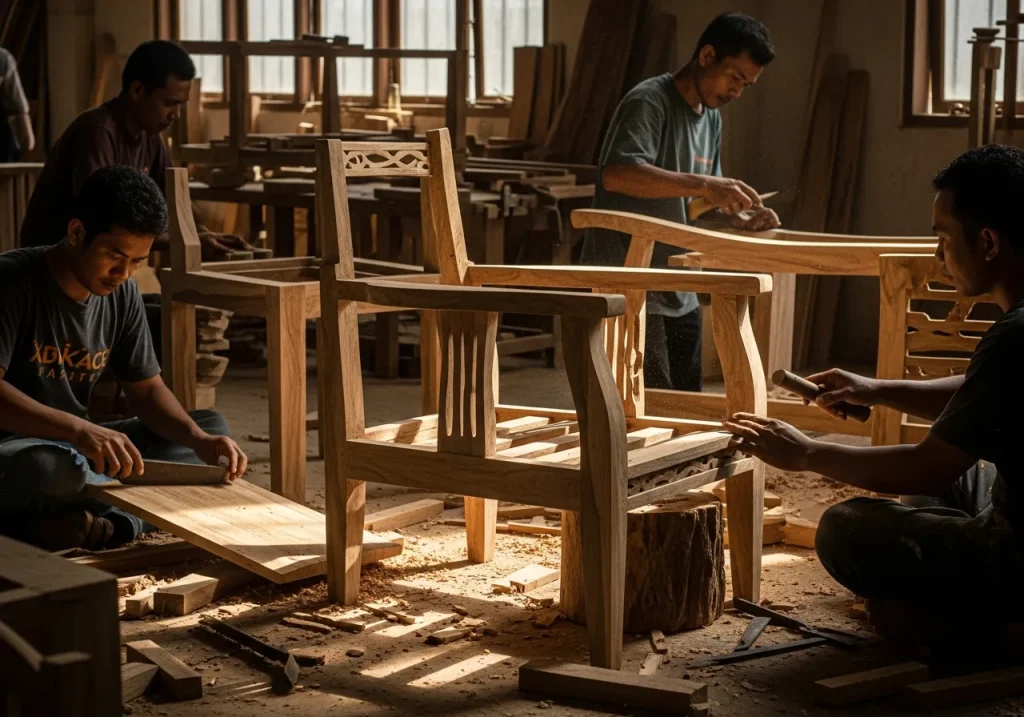
In 2027, negotiating with a wholesale teak furniture supplier in Bali requires understanding current market dynamics and exporter cost structures. The global teak furniture market, valued at USD 36.9 billion in 2026, is projected to grow, indicating sustained demand. Effective negotiation relies on clear communication, volume commitments, and an appreciation for quality specifications.
Understanding the 2027 Teak Furniture Market Landscape
The global teak furniture market continues to expand. In 2026, its valuation was approximately USD 36.9 billion, with projections indicating growth to USD 53.7 billion by 2033, reflecting a compound annual growth rate (CAGR) of 5.5%. A narrower market assessment for global teak wood furniture estimated USD 3.65 billion in 2025, forecast to reach USD 4.84 billion by 2034, at a 4.1% CAGR. These figures, while differing in scope, confirm a robust and expanding market for teak products.
Indonesia’s overall furniture market, including items beyond teak, was estimated at USD 9.1 billion in 2025 and is forecast to reach USD 15.2 billion by 2034, growing at a 5.82% CAGR. Other estimates place Indonesia’s furniture market at USD 7.97 billion in 2025, reaching USD 10.90 billion by 2030 at a 6.46% CAGR. For Indonesia’s home furniture sector specifically, one forecast shows USD 5.15 billion in 2026, growing to USD 6.32 billion by 2031 at a 4.19% CAGR. These figures indicate a healthy domestic and export-oriented furniture industry within Indonesia, which influences pricing and supply dynamics for teak furniture exporters.
2027 Note: Supply Chain Resilience
In 2027, buyers should factor in the ongoing efforts by Indonesian teak furniture exporters to enhance supply chain resilience. This includes investing in more localised raw material sourcing and diversifying logistics partners to mitigate potential disruptions. These operational improvements, while beneficial for reliability, may be reflected in pricing structures. Exporters who have successfully de-risked their supply chains may command a slight premium for their consistent delivery capabilities.
Key Factors Influencing Teak Furniture Pricing
The average global teak wood furniture price was approximately USD 500 per unit in 2025, based on around 8 million units sold. This average, however, masks significant variations driven by several critical factors. Understanding these elements is fundamental to effective negotiation.
Teak Grade and Sourcing
The grade of teak wood used is a primary determinant of cost. Premium grade A teak, sourced from mature heartwood, is the most durable and visually appealing, commanding the highest prices. Grade B and Grade C teak, while more economical, may exhibit variations in grain, colour, and durability. Buyers should specify their required teak grade clearly to ensure accurate quotations and avoid misunderstandings.
Certification and Documentation
Compliance with international timber legality standards, such as SVLK (Sistem Verifikasi Legalitas Kayu) in Indonesia, or FSC (Forest Stewardship Council) certification, adds value and ensures responsible sourcing. Certified products typically incur higher costs due to the stringent auditing and traceability requirements. For importers in markets with strict timber import regulations, certified teak is often a necessity, not an option, and should be factored into budgeting.
Kiln-Drying Quality
Proper kiln-drying is crucial for preventing cracking, warping, and insect infestation in finished furniture. High-quality, controlled kiln-drying processes add to production costs but result in a more stable and durable product suitable for varying climates. Buyers should inquire about an exporter’s kiln-drying facilities and standards.
Joinery and Construction
The methods of joinery (e.g., mortise and tenon, dovetail) and overall construction quality directly impact the furniture’s strength and longevity. Superior craftsmanship, involving skilled artisans and robust construction techniques, requires more labour and precision, leading to higher unit costs. Inspecting sample pieces for joinery and finish quality is advisable.
Finishing and Hardware
The type of finish applied (e.g., natural oil, lacquer, weathered look) and the quality of hardware (e.g., brass fittings, stainless steel components) contribute to the final price. Custom finishes or specific hardware requests will influence costs. Buyers should communicate their exact specifications.
Order Volume and Customisation
As with most wholesale transactions, larger order volumes typically allow for better per-unit pricing due to economies of scale in production and shipping. Customisation requests, while often necessary for specific designs or dimensions, generally increase costs and may extend lead times compared to standard catalogue items.
Effective Negotiation Tactics for 2027
Successful negotiation with a wholesale teak furniture supplier in Bali involves preparation and a clear understanding of your requirements and the supplier’s cost drivers. Here are some tactics that work:
- Be Specific with Specifications: Provide detailed drawings, material specifications, finish requirements, and quality standards from the outset. Ambiguity leads to misquotations and potential disputes.
- Volume Commitment: Clearly communicate your projected order volume. Exporters are more inclined to offer favourable pricing for larger, consistent orders. Consider committing to annual volumes rather than single, smaller purchases.
- Long-Term Partnership Approach: Frame your negotiation in terms of a long-term relationship. Reliable, repeat buyers are valuable to exporters, often leading to better terms over time.
- Understand the Exporter’s Cost Structure: While not fully transparent, recognise that raw material costs, labour, shipping, and compliance all contribute to the final price. Pressuring excessively on price without understanding these factors can strain relationships.
- Inquire About Payment Terms: Negotiate payment schedules. A larger upfront deposit may secure better pricing, or staggered payments linked to production milestones could be arranged. Standard terms often involve a 30-50% deposit and the balance upon shipment or against Bill of Lading.
- Consolidate Orders: If importing multiple product lines, consider consolidating orders with a single exporter or a group of exporters to maximise container space and reduce per-unit shipping costs.
- Review Freight and Incoterms: Clearly define Incoterms (e.g., FOB, CIF) to understand who is responsible for shipping costs, insurance, and duties at each stage. Negotiate these terms carefully.
- Request Samples: For new designs or significant orders, request pre-production samples. While samples incur costs, they mitigate risks and ensure quality alignment before mass production.
Price Range Considerations (Approximate)
While specific Bali-centric pricing is not publicly detailed, the global average of USD 500 per unit in 2025 serves as a general benchmark. This average encompasses a broad spectrum. Teak indoor dining sets, beds, and cabinets typically price lower than large outdoor patio sets and hospitality-grade contract furniture. The table below illustrates general categorisations for teak furniture, noting that actual prices vary widely based on the factors discussed previously.
| Product Category | Typical Characteristics | Relative Price Expectation |
|---|---|---|
| Indoor Dining Sets, Beds, Cabinets | Generally simpler designs, often smaller scale, less exposed to elements. | Lower to Mid-Range |
| Large Outdoor Patio Sets | Robust construction, weather-resistant finishes, often intricate designs, larger dimensions. | Mid to High-Range |
| Hospitality-Grade Contract Furniture | Designed for heavy commercial use, enhanced durability, specific safety/fire ratings, often custom specifications. | High-Range |
| Small Accent Pieces (e.g., Stools, Side Tables) | Minimal material, simpler construction. | Entry-Level |
Negotiation should focus on value — securing the right quality product for your market at a competitive price, rather than simply pursuing the lowest possible figure. A reliable wholesale teak furniture supplier in Bali prioritises consistent quality and timely delivery, which are often more valuable long-term than minor price reductions.
For specific wholesale inquiries and to discuss your requirements, request a wholesale quote on WhatsApp. We are ready to assist you with your teak furniture sourcing needs from Jepara, Indonesia.