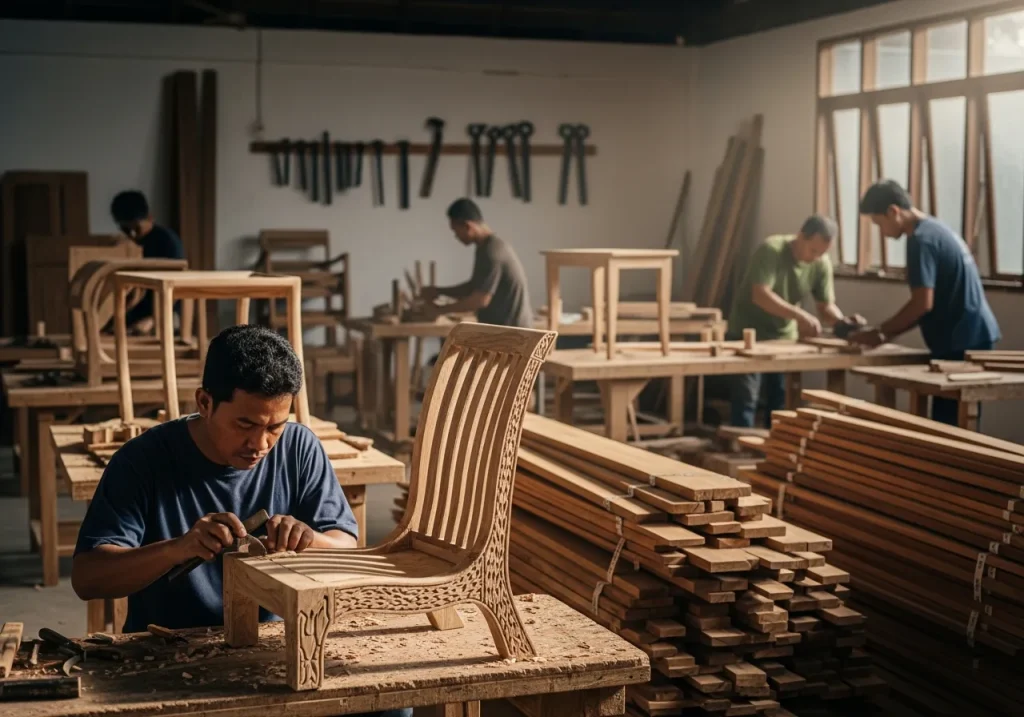
The global teak furniture market reached USD 36.9 billion in 2026, with projections indicating growth to USD 53.7 billion by 2033 at a 5.5% CAGR. For Indonesia, the broader furniture market was estimated at USD 9.1 billion in 2025, forecast to reach USD 15.2 billion by 2034 with a 5.82% CAGR. Importers must assess joinery and moisture content to mitigate risks.
As a B2B importer, wholesaler, or trade buyer sourcing rustic teak furniture wholesale from Bali, understanding the critical aspects of product quality is paramount. The long-term durability and aesthetic integrity of teak furniture are directly linked to fundamental manufacturing processes: joinery and moisture content. This article details how to identify substandard practices and ensure the quality of your wholesale teak purchases from Indonesian exporters.
Understanding Teak Furniture Quality for B2B Buyers
The global teak furniture market is substantial, valued at approximately USD 36.9 billion in 2026, with forecasts suggesting growth to USD 53.7 billion by 2033. Indonesia’s furniture market, including teak, is a significant contributor, estimated at USD 9.1 billion in 2025 and projected to reach USD 15.2 billion by 2034. With an average global teak wood furniture price of about USD 500 per unit in 2025, buyers must ensure this investment yields quality. The integrity of each piece fundamentally depends on meticulous craftsmanship, particularly in joinery, and precise moisture control during manufacturing.
Identifying Poor Joinery in Teak Furniture
Joinery is the backbone of furniture construction. Poorly executed joints compromise structural integrity, leading to instability, cracks, and premature failure. When evaluating samples or during factory inspections, pay close attention to the following aspects:
Types of Joinery and Their Importance
- Mortise and Tenon: This traditional joint involves a tenon (a projection) fitting into a mortise (a cavity). A well-executed mortise and tenon joint will fit snugly, without gaps. Gaps indicate poor milling or insufficient adhesive application, leading to weakness.
- Dovetail Joints: Often used for drawers, dovetails offer high resistance to being pulled apart. Look for precisely cut, tightly interlocking ‘tails’ and ‘pins’. Loose or uneven dovetails suggest hurried production or inadequate machinery.
- Dowels: Dowel joints use cylindrical pins to align and reinforce two pieces of wood. While common, they are less robust than mortise and tenon or dovetail joints for load-bearing applications. Ensure dowels are adequately sized, properly aligned, and fully embedded with sufficient adhesive.
- Biscuit Joints: These use flattened, oval-shaped wooden biscuits inserted into slots cut in the mating edges. They primarily aid alignment during assembly. For structural strength, they should be supplemented with other joint types.
Inspection Points for Joinery Quality
When assessing joinery, conduct a thorough visual and tactile inspection:
- Gaps and Misalignment: Run your hand over the joint. It should feel smooth and continuous. Visible gaps, even hairline ones, or misaligned surfaces indicate poor craftsmanship. These gaps can accumulate moisture, leading to rot or pest infestation.
- Excess Glue: While glue is essential, excessive squeeze-out that has not been properly cleaned can indicate a sloppy process or an attempt to fill gaps. Dried glue on the surface can also prevent proper finishing adhesion.
- Fasteners: If screws or nails are used, they should be countersunk and filled, or strategically placed where they do not detract from the aesthetic. Exposed fasteners, particularly those not specifically designed for decorative purposes, suggest lower quality.
- Stability Test: Gently rock or apply pressure to joints, particularly on chairs, tables, and cabinets. There should be no wobble or creaking. Any movement indicates a weak joint that will fail under regular use.
Detecting High Moisture Content in Teak Furniture
Teak’s durability is renowned, but its performance is significantly compromised if the wood is not properly dried. High moisture content (MC) leads to warping, cracking, shrinking, and expansion, particularly when furniture moves from a humid manufacturing environment to a drier climate.
The Importance of Kiln Drying
Kiln drying is the most effective method for reducing wood moisture content to an appropriate level for furniture production. Air drying alone is often insufficient for export-grade furniture. For furniture destined for export, particularly to temperate climates, the target moisture content for teak should typically be between 8% and 12%. Different target MCs may apply for specific climates; confirm this with your supplier.
Methods for Identifying High Moisture Content
Importers should employ the following methods to verify moisture content:
- Moisture Meter Usage: This is the most direct method. Use a reliable pin-type or pinless moisture meter. Take readings from various points on different pieces of furniture. Consistency in readings within the acceptable range (8-12%) is crucial. Readings above 12% indicate inadequately dried wood.
- Visual Cues: While less precise, visual indicators can suggest moisture issues. Look for signs of surface mould, mildew, or dark staining, which can develop in high-humidity conditions.
- Weight and Feel: Extremely wet wood will feel noticeably heavier than properly dried wood of the same dimensions.
- Smell: A musty or damp smell can indicate high moisture content or even the beginning of decay.
- Warping and Cracking: If furniture already shows signs of warping (bowing, cupping, twisting) or cracking, it is a strong indication of improper drying or changes in moisture content after manufacture.
2027 Note on Certification and Supply Chain
By 2027, the emphasis on certified timber sources will likely be even more pronounced. Ensure that your supplier provides valid SVLK (Sistem Verifikasi Legalitas Kayu) certification, Indonesia’s national timber legality assurance system, and ideally FSC (Forest Stewardship Council) certification. These certifications not only guarantee legal sourcing but often correlate with more professional manufacturing practices, including proper kiln-drying facilities and quality control processes, which directly impact joinery and moisture content standards. The global teak furniture market, valued at USD 36.9 billion in 2026, continues to grow, making due diligence in sourcing even more critical to secure reliable supply chains.
Due Diligence in Supplier Selection
To avoid common pitfalls, B2B buyers should implement a rigorous supplier selection process:
Factory Audits and Quality Control
Conducting factory audits or commissioning a third-party inspection agency is advisable. These audits should assess:
- Kiln Drying Facilities: Verify the presence, capacity, and operational procedures of their kiln-drying chambers. Ask for drying schedules and records.
- Workshop Practices: Observe the cleanliness and organisation of the workshop. A tidy workshop often reflects attention to detail in production.
- Tooling and Machinery: Modern, well-maintained machinery generally produces more precise cuts and better joinery than old or poorly maintained equipment.
- Quality Control Protocols: Understand the exporter’s internal QC process. Do they have dedicated QC staff? At what stages of production are checks performed?
Sample Evaluation
Always request samples before committing to large orders. Subject these samples to the joinery and moisture content tests outlined above. This initial evaluation provides a tangible benchmark for the quality you can expect.
The Impact of Quality on Your Business
Investing in teak furniture with superior joinery and appropriate moisture content reduces returns, customer complaints, and claims. It safeguards your brand reputation and ensures customer satisfaction. For importers, wholesalers, and retailers, this translates directly to repeat business and sustained profitability in a competitive market. The Indonesian furniture market is forecast to reach USD 15.2 billion by 2034, indicating significant opportunities for those who prioritise quality.
Securing high-quality rustic teak furniture wholesale from Bali requires diligent inspection of joinery and moisture content. By focusing on these fundamental aspects, B2B buyers can mitigate risks and ensure their imported products meet the expected standards of durability and craftsmanship. For further information or to discuss your specific requirements, request a wholesale quote on WhatsApp.