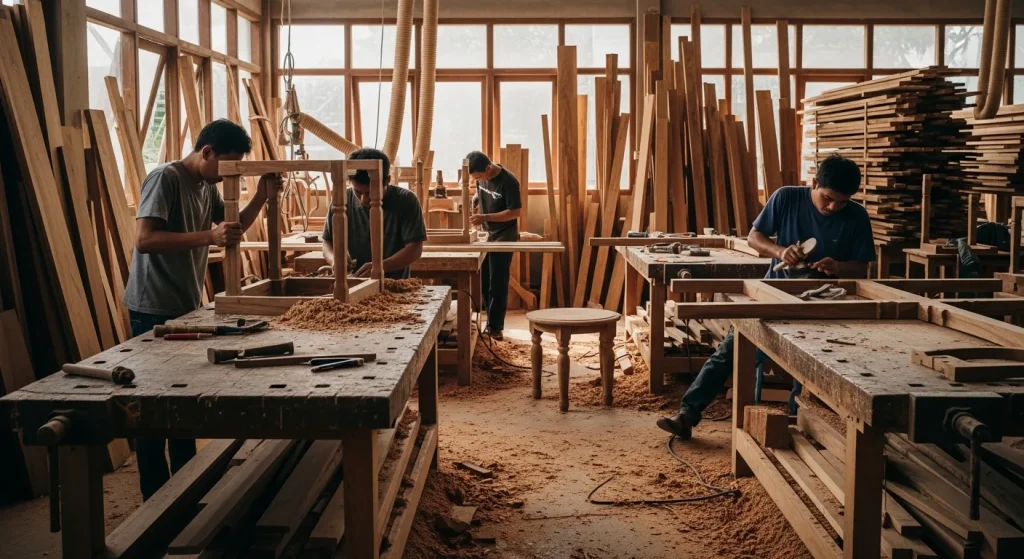
Auditing a teak furniture exporter in Indonesia for 2027 requires a methodical approach to verify quality and compliance. Focus on material sourcing, manufacturing processes, and adherence to international standards like SVLK and FSC. This guide outlines key steps for importers, wholesalers, and trade buyers to assess supplier capabilities and product integrity effectively.
As a B2B buyer of teak furniture, understanding how to audit an Indonesian exporter is crucial for securing quality products and ensuring ethical sourcing. This guide provides a step-by-step framework for verifying Indonesian quality standards in 2027, focusing on the practical aspects of due diligence.
Understanding the Indonesian Teak Furniture Market in 2027
The global teak furniture market, valued at USD 36.9 billion in 2026, is projected to reach USD 53.7 billion by 2033, indicating a 5.5% CAGR. A narrower estimate places the global teak wood furniture market at USD 3.65 billion in 2025, rising to USD 4.84 billion by 2034 with a 4.1% CAGR. Indonesia’s furniture market overall was estimated at USD 9.1 billion in 2025 and is forecast to reach USD 15.2 billion by 2034 at a 5.82% CAGR. Another source estimates Indonesia’s furniture market at USD 7.97 billion in 2025 and USD 10.90 billion by 2030 at 6.46% CAGR. For Indonesian home furniture specifically, one forecast shows USD 5.15 billion in 2026 growing to USD 6.32 billion by 2031 at 4.19% CAGR. These figures highlight the significant and growing market for Indonesian furniture, necessitating rigorous auditing practices for buyers.
The average global teak wood furniture price was approximately USD 500 per unit in 2025, based on about 8 million units sold globally. This average conceals a wide price range. Teak indoor dining sets, beds, and cabinets generally price lower than large outdoor patio sets and hospitality-grade contract furniture. Pricing is primarily driven by teak grade, FSC/SVLK documentation, kiln-drying quality, joinery, finish, and order volume. Certified, export-ready product commands a premium.
Step 1: Verify Legal Compliance and Certifications
Compliance with Indonesian and international timber legality standards is non-negotiable. Importers must ensure their suppliers adhere to these regulations to avoid legal complications and uphold ethical sourcing practices.
SVLK (Sistem Verifikasi Legalitas Kayu)
The SVLK is Indonesia’s national timber legality assurance system. It is mandatory for all timber products exported from Indonesia. Verifying an exporter’s SVLK certification is the first critical step. Request copies of their SVLK certificates and cross-reference them with the official Indonesian government database. Ensure the certificate is current and covers the specific product categories you intend to purchase.
FSC (Forest Stewardship Council)
While SVLK ensures legality, FSC certification addresses sustainable forest management. Many buyers prefer FSC-certified teak to demonstrate commitment to environmental responsibility. There are different types of FSC certification:
- FSC 100%: All wood in the product comes from FSC-certified forests.
- FSC Mix: A mix of FSC-certified wood, recycled wood, and/or controlled wood.
- FSC Recycled: All wood in the product is recycled.
Confirm the exporter holds the appropriate FSC certification for the products offered. Request the certificate number and verify its validity on the FSC public database.
2027 Note:
In 2027, increased scrutiny on supply chain transparency means buyers should expect exporters to provide digital records and blockchain-enabled traceability for timber origins. This technology is becoming more common for verifying legality and sustainability claims.
Step 2: Assess Teak Wood Quality and Sourcing
The quality of the raw material directly impacts the final product. Understanding teak grades and sourcing practices is vital.
Teak Grades
Teak wood is typically categorised into three grades:
- Grade A Teak: This is the highest quality, derived from the heartwood of mature trees (over 30 years old). It has a uniform, golden-brown colour, tight grain, and high natural oil content, making it exceptionally durable and resistant to rot and pests.
- Grade B Teak: Contains a mix of heartwood and sapwood, often from younger trees. It may have some discolouration, knots, and a lower oil content than Grade A, requiring more maintenance.
- Grade C Teak: The lowest quality, primarily sapwood from immature trees. It is lighter in colour, less durable, and prone to cracking and rot. It often requires extensive treatment and finishing.
Specify the desired teak grade in your order and verify that the exporter consistently uses it. Request samples of different grades if necessary.
Sourcing Practices
Inquire about the exporter’s sourcing of raw teak wood. Do they procure from government-managed plantations (Perum Perhutani) or private suppliers? Ensure their sourcing aligns with their SVLK and FSC certifications. A reputable exporter will be transparent about their timber supply chain.
Step 3: Evaluate Manufacturing Processes and Quality Control
The manufacturing process, from kiln-drying to joinery, significantly affects the furniture’s durability and finish.
Kiln-Drying Facilities
Proper kiln-drying is essential to prevent warping, cracking, and shrinkage. Ask for details on the exporter’s kiln-drying process:
- What is their target moisture content for export-grade furniture (typically 8-12%)?
- How do they monitor moisture content?
- What is the capacity of their kilns?
If possible, conduct a factory visit to inspect the kiln-drying facilities and check moisture meters.
Joinery and Construction
Inspect the joinery techniques used. Traditional methods like mortise and tenon, dovetail, and dowel joints are indicative of quality craftsmanship. Avoid furniture assembled with only screws or staples, as these are less durable. Examine sample pieces for tight, well-fitted joints. Ask about the type of glue used (e.g., waterproof D3 or D4 adhesive).
Finishing and Hardware
The finish protects the wood and enhances its appearance. Inquire about the types of finishes applied (e.g., natural oil, lacquer, wax). Ensure the finish is appropriate for the intended use (indoor/outdoor). Check the quality of hardware (hinges, drawer slides, handles) – it should be durable and corrosion-resistant, especially for outdoor furniture.
Quality Control (QC) Procedures
A robust QC system is vital. Ask the exporter about their QC checkpoints:
- Incoming material inspection (raw timber).
- In-process inspections (during cutting, shaping, assembly).
- Final inspection before packaging.
Request copies of their QC checklists or procedures. Consider engaging an independent third-party inspection agency for pre-shipment inspections.
Step 4: Assess Packaging and Logistics
Proper packaging protects furniture during transit, and efficient logistics ensure timely delivery.
Packaging Standards
Discuss the exporter’s packaging methods. Furniture should be adequately protected with materials such as bubble wrap, foam, corrugated cardboard, and wooden crates for fragile items. Ensure the packaging is suitable for long-distance international shipping and protects against moisture and impact.
Logistics and Shipping
Clarify Incoterms (e.g., FOB, CIF) and discuss their experience with international shipping. Inquire about their preferred shipping lines, lead times, and procedures for handling customs documentation. A reliable exporter will have established relationships with freight forwarders and a clear process for export documentation.
Step 5: Review Exporter References and Factory Audit
Beyond documentation, direct verification and external validation are crucial.
Client References
Request references from other international buyers. Contacting these references can provide valuable insights into the exporter’s reliability, product quality, and customer service.
Factory Visit or Third-Party Audit
Ideally, conduct a factory visit to observe operations firsthand. If a physical visit is not feasible, arrange for a reputable third-party auditing firm to conduct an independent factory audit. This audit should cover:
- Production capacity and equipment.
- Workforce skills and working conditions.
- Adherence to safety standards.
- Environmental management practices.
Summary of Key Audit Points
| Audit Area | Key Verification Points |
|---|---|
| Legal Compliance | SVLK & FSC Certification (verify validity & scope) |
| Raw Material | Teak Grade (A, B, C), Sourcing Traceability |
| Manufacturing | Kiln-Drying (moisture content), Joinery (mortise & tenon), Finish Quality |
| Quality Control | In-process & Final QC procedures, Documentation |
| Packaging | Suitability for export, Protection against damage & moisture |
| Logistics | Incoterms, Shipping experience, Documentation handling |
| References | Client testimonials, Third-party audit reports |
By systematically applying these audit steps, buyers can confidently assess Indonesian teak furniture exporters in 2027, ensuring they secure high-quality, legally compliant, and sustainably sourced products. This due diligence process minimises risks and establishes a foundation for successful long-term partnerships.
For wholesale enquiries and to discuss how Teak Furniture Exporter meets these stringent quality and compliance standards, request a wholesale quote on WhatsApp.