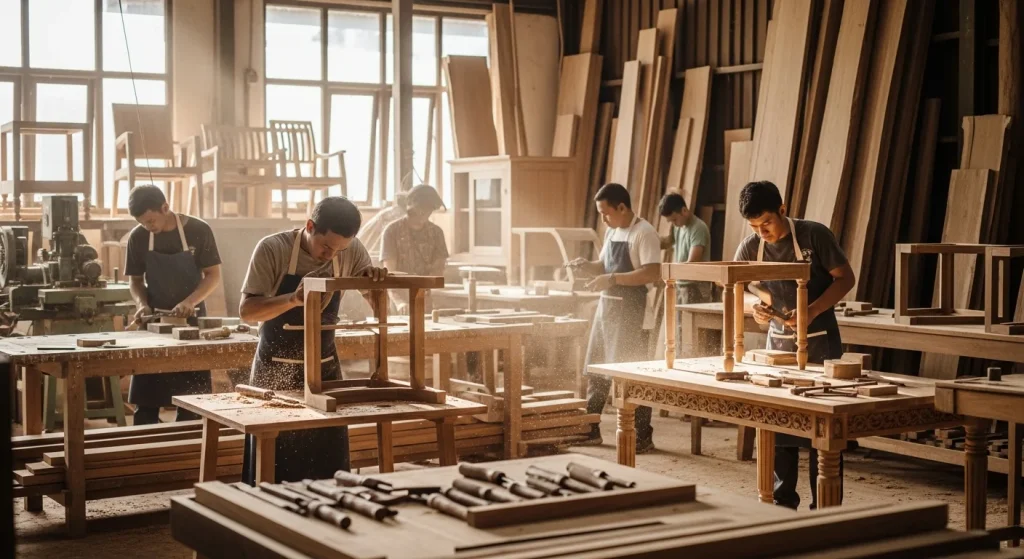
Comparing teak furniture exporter pricing in 2027 requires understanding the underlying cost structures prevalent in Indonesia. This analysis provides a direct comparison of factors influencing pricing, enabling importers, wholesalers, and trade buyers to make informed procurement decisions from Indonesian manufacturers.
Understanding the Global and Indonesian Teak Furniture Market in 2027
The global teak furniture market continues to demonstrate robust growth. In 2026, the market was valued at approximately USD 36.9 billion and is projected to reach USD 53.7 billion by 2033, indicating a Compound Annual Growth Rate (CAGR) of 5.5%. A more specific estimate for the global teak wood furniture market places its value at USD 3.65 billion in 2025, rising to USD 4.84 billion by 2034 with a 4.1% CAGR. This narrower figure likely reflects a different scope of market definition compared to the broader teak furniture estimate.
Indonesia’s domestic furniture market also shows significant expansion. For Indonesia overall, the furniture market was estimated at USD 9.1 billion in 2025 and is forecast to reach USD 15.2 billion by 2034, growing at a 5.82% CAGR. Another estimate projects Indonesia’s furniture market at USD 7.97 billion in 2025 and USD 10.90 billion by 2030, with a 6.46% CAGR, illustrating variations in reported market sizes based on methodology. Focusing on Indonesia’s home furniture sector, one forecast indicates a market size of USD 5.15 billion in 2026, expanding to USD 6.32 billion by 2031 at a 4.19% CAGR.
Key Drivers of Teak Furniture Pricing from Indonesia
Pricing for Scandinavian teak furniture manufacturers in Indonesia is not static; it is influenced by several critical factors that buyers must consider. Understanding these components allows for a more accurate comparison between different exporters.
Teak Wood Grade and Origin
The grade of teak wood is a primary determinant of cost. Indonesian teak is classified into grades such as Grade A (heartwood, knot-free), Grade B (some sapwood, minor knots), and Grade C (more sapwood, knots, and imperfections). Grade A teak commands the highest price due to its durability, uniformity, and aesthetic appeal. The origin of the teak, whether from sustainably managed plantations or older growth, also impacts pricing.
Certifications: FSC and SVLK Documentation
Compliance with international and national timber legality standards adds a premium. FSC (Forest Stewardship Council) certification ensures timber comes from responsibly managed forests. SVLK (Sistem Verifikasi Legalitas Kayu) is Indonesia’s national timber legality assurance system, mandatory for all timber products exported from Indonesia. Exporters with verifiable FSC and SVLK documentation will typically have higher prices, reflecting their adherence to ethical sourcing and legal compliance, which is crucial for many international buyers.
Kiln-Drying Quality and Moisture Content
Proper kiln-drying is essential for the stability and longevity of teak furniture, particularly for export to diverse climates. Furniture dried to an optimal moisture content (typically 8-12%) prevents warping, cracking, and shrinkage. Exporters investing in high-quality, controlled kiln-drying processes will factor this into their pricing. Inferior drying can lead to significant problems post-delivery, making this a critical cost component.
Joinery and Construction Methods
The quality of joinery significantly impacts the durability and structural integrity of teak furniture. Traditional methods such as mortise and tenon, dovetail, and dowel joints, when executed precisely, require skilled labour and more time, thus increasing production costs. Lower-cost alternatives might use simpler, less durable joinery or rely more heavily on screws and glue, which can compromise the furniture’s lifespan. Scandinavian teak furniture manufacturers in Indonesia often prioritise robust joinery for longevity.
Finishing and Hardware
The type and quality of finish applied to the teak furniture contribute to its final price. Options range from natural oil finishes that enhance the wood’s grain to lacquers and sealants offering different levels of protection and aesthetics. High-quality, UV-resistant finishes for outdoor furniture, for example, are more expensive. Similarly, the quality of hardware (e.g., hinges, runners, handles) used in cabinets and drawers can influence the overall cost.
Order Volume and Customisation
Volume discounts are common in wholesale furniture procurement. Larger orders often result in lower per-unit costs due to economies of scale in production and shipping. Customisation requests, such as specific dimensions, unique designs, or bespoke finishes, will generally increase the price per unit compared to standard catalogue items, reflecting additional design, prototyping, and production complexities.
2027 Note on Export Logistics and Shipping Costs
In 2027, global shipping rates continue to be a significant factor in the final landed cost of teak furniture from Indonesia. Buyers should anticipate that ocean freight costs, port charges, and local customs duties will constitute a substantial portion of the total expense. Fluctuations in fuel prices and container availability directly impact these costs, requiring current quotes for accurate budgeting.
Average Teak Furniture Unit Pricing (Approximate)
While specific Bali-centric FOB pricing is not generally published, the average global teak wood furniture price was approximately USD 500 per unit in 2025, based on roughly 8 million units sold globally. This average figure masks substantial variation. Teak indoor dining sets, beds, and cabinets typically price lower than large outdoor patio sets and hospitality-grade contract furniture. The table below illustrates how different factors contribute to price variations.
| Factor | Impact on Price | Notes |
|---|---|---|
| Teak Grade A | Highest | Clear grain, knot-free, heartwood |
| Teak Grade B | Medium | Some sapwood, minor knots |
| Teak Grade C | Lowest | More sapwood, knots, imperfections |
| FSC/SVLK Certified | Premium | Ensures legal and sustainable sourcing |
| High-Quality Kiln Drying | Premium | Prevents warping, cracking |
| Mortise & Tenon Joinery | Premium | Durable, skilled labour intensive |
| Standard Joinery | Medium | Common, effective for most uses |
| Basic Joinery | Lower | Simpler construction, less durable |
| Oil Finish | Standard | Enhances natural wood, requires maintenance |
| Lacquer/Sealer Finish | Premium | More protection, less maintenance |
| Large Outdoor Sets | Higher | More material, complex designs |
| Indoor Dining Sets | Medium | Standard sizes, less material |
| High Order Volume | Lower per unit | Economies of scale |
| Low Order Volume | Higher per unit | Less production efficiency |
Comparing Manufacturer Capabilities
When comparing prices from various Indonesian teak furniture exporters, it is crucial to assess their capabilities beyond the quoted figures. A lower initial price may reflect compromises in materials, construction, or certifications that could lead to higher long-term costs or customer dissatisfaction.
- Production Capacity: Can the manufacturer handle your order volume within the required timeframe?
- Quality Control: What processes are in place to ensure consistent quality from raw material to finished product?
- Communication: How responsive and clear is their communication? This is vital for managing orders and resolving issues.
- Experience: Does the exporter have a proven track record with international buyers and specific product types (e.g., Scandinavian teak furniture)?
- After-Sales Support: What support is offered for any issues arising post-shipment?
The Value Proposition of a Reliable Exporter
Choosing a teak furniture exporter solely based on the lowest price can be a false economy. A reputable exporter, especially one specialising in Scandinavian teak furniture manufacturing in Indonesia, offers a value proposition that includes consistent quality, adherence to specifications, reliable lead times, and comprehensive documentation. These elements minimise risks and ensure a smoother supply chain, ultimately contributing to a more profitable and sustainable business relationship.
For importers, wholesalers, retailers, and interior contractors, a thorough evaluation of these cost structures and capabilities is essential for making informed purchasing decisions in the competitive 2027 teak furniture market. Focus on the overall value, not just the initial price point, to secure high-quality, export-ready products.
To discuss your specific requirements and request a wholesale quote on WhatsApp, please contact us directly.